- Details
- Category: Voyages
A landing looks effortless from the beach. Behind it is a morning of checks, a backup plan, and a great deal of weather watching.
When guests step off a landing boat onto a quiet shore, the moment feels spontaneous. It is anything but. A landing day is one of the most carefully planned parts of the voyage, and understanding the routine tends to make people enjoy it more.
The evening before
The expedition leader meets the captain and the naturalist to review tomorrow's options. There is never just one plan. Typically there is a preferred landing, an alternative in a more sheltered spot, and a ship-based activity for the case where neither works.
Tides, swell, wind, and the state of the beach are all considered. If a shore is exposed, the team prefers to wait rather than guess.
The morning scout
Before guests are woken, a small scouting party goes ashore. They check the landing point for hazards, mark the route, and confirm that wildlife is not too close. If something is wrong, the plan changes, and guests simply hear that "we have a better idea."
Briefing and boarding
Over breakfast the leader explains the plan: where we are going, how long we will be there, and what to watch for. Guests are given a time window and a simple set of rules about keeping a respectful distance from animals and plants.
Boarding is staggered. Small groups go first, with guides on the beach to meet them. Each boat carries a radio, spare warm layers, and a first aid kit.
On the shore
Guides stay with their groups but never hurry them. Some guests want to walk the full loop, others prefer to sit and watch. Both are welcome, and the schedule has slack built in.
Our rule of thumb is that nothing on the shore should feel rushed. If the group is still absorbed at the planned return time, the return time moves.
Coming home
Everyone is counted twice at the boat. Equipment is rinsed, boots are scrubbed in a basin to avoid carrying seeds between islands, and hot chocolate waits in the lounge.
Why it matters
A well-run landing is a quiet one. Nothing dramatic happens, nobody is anxious, and the whole group gets the chance to simply be somewhere beautiful. That ease is the product of a great deal of preparation, and we think it is worth the effort every single time.

- Details
- Category: Voyages
A ship with room for sixty guests can go where a large vessel cannot. That single fact reshapes the whole trip.
There is a simple reason expedition outfitters build small ships. A vessel that carries sixty guests instead of three thousand can slip into a narrow sound, anchor beside a tiny island, and put everyone ashore within an hour.
It sounds like a logistics point. In practice it changes how a coastline feels.
Time, not distance
On a large ship, the day is organised around ports. You arrive, you are given a few hours, and you leave. On a small ship the day is organised around whatever is outside the window. If a fog bank lifts and reveals a sea stack, the captain can stop. If the swell is wrong for a landing, the plan changes and nobody argues about it.
That flexibility is why our itineraries read more like intentions than timetables.
Quieter water, closer views
Small ships have a gentler footprint. Fewer engines, slower speeds, and a shallow draft mean you can approach cliffs and kelp forests at a pace that suits watching rather than passing.
Guests often tell us the quiet was the thing they remembered most. Without the bustle of a big ship, you notice birdsong, the sound of ice settling, and the particular hush that follows a rain shower on still water.
Knowing the people around you
With sixty guests and a dozen crew, you will learn names by the second day. The expedition leader, the naturalist, and the galley team all eat in the same dining room as everyone else. Questions are answered over coffee rather than at a scheduled talk.
That closeness is not a luxury feature. It is simply what happens when the group is small enough to be a group.
The honest trade-offs
Small ships move more in rough water. Cabins are compact. There is no casino, no climbing wall, and no shopping arcade. If those things matter to you, a small ship may not be your best choice.
What you gain is access, flexibility, and a sense of belonging to a short list of people who are all looking at the same horizon.
Choosing a departure
Our Skerry Coast voyages run from late spring to early autumn. Shoulder-season departures are quieter and often the best for photography. If you are unsure which departure suits you, the Northlight team will talk it through without any pressure to book.
Whatever you choose, plan to spend more time on deck than you expect. The coastline is the main event, and a small ship is the best seat in the house.

- Details
- Category: Field Notes
Tidewater Field Notes began as a notebook on a ship's bridge. This is what a year of slow travel by sea has taught the team.
Tidewater Field Notes started as a simple habit. Devika Rao, our producer, carried a notebook on every voyage and wrote down one observation each evening. A year later, those pages became a small audio series and a regular column on this site.
This post collects a few things the notebook taught us about slow travel.
Speed is not the point
On most journeys, the destination is the goal and the route is the cost. At sea it is the other way around. A ship at twelve knots gives you hours to look at one stretch of coast, and the coast rewards that attention.
Guests who arrive with a long checklist are often the ones who relax fastest. By the third day they are happy to sit with a coffee and watch the light change.
The value of routine
Slow travel has a rhythm. Breakfast, a morning landing, lunch, an afternoon talk, a quiet hour on deck, dinner. It is not strict, but it is steady, and it lets people settle.
We learned to protect the quiet hour. When we tried filling it with another activity, guests told us they missed it.
Listening to place
Our audio work is built around ambient sound: surf on shingle, rigging in a breeze, the bell on a harbour buoy. Recording these sounds forced the team to listen differently, and that habit has carried into everything else we do.
If you ever sail with us, try this: spend ten minutes with your eyes closed on deck. You will hear things you had not noticed.
Fewer places, more depth
A slow itinerary covers fewer ports. That frustrates some travellers and delights others. We think the reward is depth: you come to know a handful of places well enough to recognise them again.
Where to start
If slow travel by sea is new to you, begin with a short voyage. Five or six nights is enough to feel the shift without a large commitment. Bring a notebook. You may find yourself writing something down each evening, as we did.
Tidewater Field Notes episodes and columns are free to read and listen to. The team reads every message, and we reply to as many as we can.

- Details
- Category: Field Notes
Seven days, almost no visibility, and one of the most memorable voyages of the season. A diary from the bridge wing.
The forecast said fog, and the forecast was right. What it did not say is how beautiful a week of grey could be.
Day one: leaving harbour
We slipped out of Marrow Quay at first light with the foghorn sounding every two minutes. The coast vanished behind us in about ten minutes. Guests gathered at the rail, mostly in silence, watching the shoreline dissolve.
Day two: the island that was not there
Our planned landing on Vesper Island was cancelled for visibility. Instead, the captain eased the ship along the shore at a crawl, and the cliffs appeared and disappeared like a slow film. Seabirds loomed out of the mist, close enough to hear their wingbeats.
Day three: small boats and sound
Fog changes how you listen. In the landing boats, we turned the motors off and drifted through a kelp bed. Every sound carried: water dripping from oars, a seal exhaling somewhere out of sight, a bell buoy marking a channel.
Several guests said they had never felt so far from everything, in the best sense.
Day four: the lift
Late morning, the fog thinned from the top down. A pale sun appeared, then a patch of blue, then the whole of Halden Sound in full colour. The galley team, who had been watching from the pass, cheered quietly into their sleeves.
We took more photographs in those forty minutes than in the rest of the week combined.
Days five to seven
The grey returned, but we were used to it by then. The naturalist ran evening talks on how fog forms along cold coasts, and the guests turned out to be happy to learn about it. On the last night, someone organised a quiet quiz in the lounge with prizes of chocolate.
What the week taught the team
- Plans written in pencil are better than plans written in ink
- Guests will forgive a missing landing if you give them something true to look at
- A good soundscape is as valuable as a good view
Fog is not the weather people book a voyage for. It might be the weather they remember longest.
- Details
- Category: Guides
The inflatable landing boats are the heart of an expedition cruise. Here is a calm walk-through for first-timers.
If you have never stepped from a ship into a small inflatable boat, the idea can seem a little daunting. It is much simpler than it looks, and by the end of the first outing most guests are asking when the next one is.
Before you board
You will be given a lifejacket that is fitted by a crew member. It is bulky but light, and it is not negotiable. Waterproof trousers and boots go on in the changing area, usually near the gangway.
Leave anything you do not need in the cabin. Keep your camera in a dry bag, and carry only what you can manage with one hand.
Getting in
At the gangway, two crew members will guide you using what we call the sailor's grip: you grasp their forearm, they grasp yours, and you step down together onto the boat. It feels secure because it is. Take your time, and never jump.
Sit along the side tubes facing inward. The driver will tell you where to place your hands and feet.
The ride
Landing boats move at a gentle pace through sheltered water. In rougher conditions you may get spray, so a hood is useful. The driver will describe what you are passing, and often stops so the group can watch wildlife or ice.
If you feel nervous, sit near the middle of the boat where movement is gentlest.
Stepping ashore
At the beach the driver will bring the bow to the shoreline, and a guide will help you out. You step onto wet stones or sand in your boots. Move up the beach promptly, so the next person has space.
Coming back
The return follows the same routine in reverse. Sit down, hold on, and enjoy the ride. Many guests find the trip back, with a low sun on the water, the best part.
Common questions
Is it safe for people with limited mobility? Often yes, with assistance. Please tell us in advance so we can plan.
Can I bring a walking stick? Yes, and some guides carry spares.
What if the water is too rough? Then we do not go. The expedition leader decides, and the choice is never taken lightly.
Your first outing will probably be the one you talk about at home.

- Details
- Category: Guides
Ice fools cameras. These five habits, collected from our photography workshops, will give you cleaner images and fewer disappointments.
Ice is among the most photogenic things you will ever see from a ship, and among the hardest to photograph well. The brightness confuses exposure meters, the colours change by the minute, and the scale is almost impossible to convey. A few simple habits help a great deal.
1. Expose for the whites
Cameras tend to treat a bright scene as too bright and darken it, which turns white ice grey. Dial in a little extra exposure, usually between one and two stops over, and check the preview. If the brightest areas show as a flat patch on your histogram, pull back slightly.
2. Include something for scale
A towering berg looks like a small lump without a reference. A boat, a bird, or even a stretch of dark water at the base gives the eye something to measure against. Our guides will often position a landing boat in the corner of the frame for exactly this reason.
3. Shoot in the soft hours
Midday sun flattens ice into a glare. The hours around sunrise and sunset bring warm tones to the highlights and deep blue to the shadows. Overcast days are surprisingly good as well, because the soft light reveals the texture inside the ice.
4. Look for the blue
The deepest blue appears where ice is old and compressed, and where it has recently rolled. A polarising filter helps cut surface reflections and saturates the colour. If you do not have one, simply changing your angle can make a big difference.
5. Slow down
The best ice photographs rarely come from the first glance. Spend ten minutes watching one berg. Notice how the light moves across it, how the water laps at the base, and how birds use the ledges. Then take the picture.
A short kit list
- A body with a lens that covers wide to medium zoom
- Spare batteries, kept in an inner pocket to stay warm
- A lens cloth, because spray lands on glass constantly
- A rain cover for the camera
One last thing
Put the camera down for part of every sighting. The most vivid memory is usually the one you took in with your own eyes, and the photographs will be better for the rest.
- Details
- Category: Guides
Nobody can promise an aurora, but you can stack the odds in your favour. This is how our naturalists plan a night on deck.
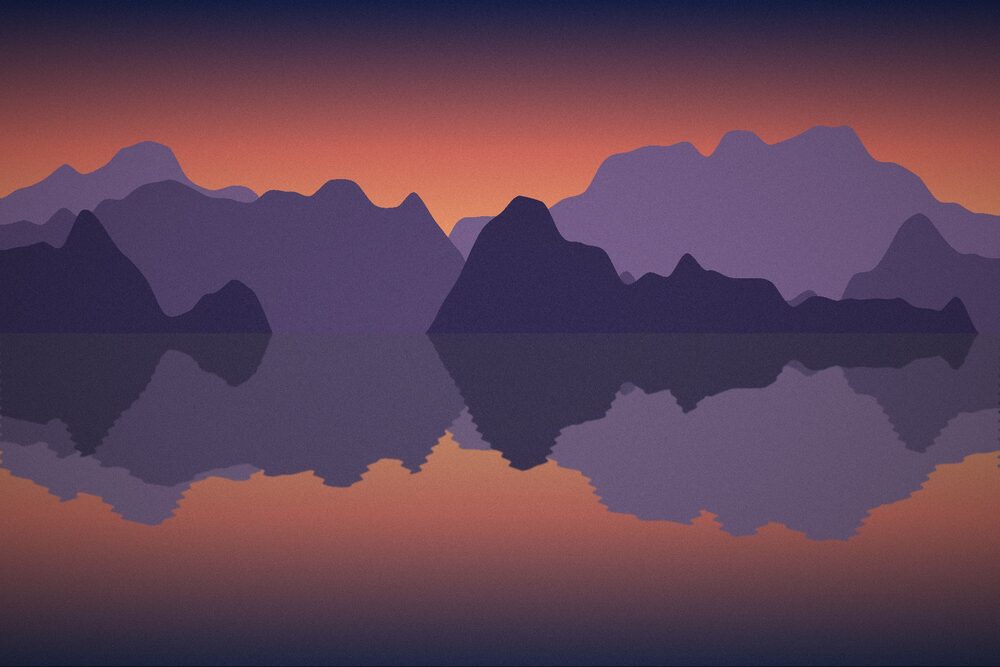
Every autumn voyage on the Halden Sound has the same conversation in the lounge: will we see the lights? The honest answer is that nobody knows until the sky decides. What the team can do is make sure you are in the right place, dressed properly, and ready when it happens.
Understand what you are looking for
The aurora is caused by charged particles from the sun meeting the upper atmosphere. Forecasters measure that activity on a scale that runs from quiet to stormy. A strong forecast helps, but even a modest night can produce a soft green arc low on the horizon.
To the eye, a faint aurora can look like a pale cloud. A camera often shows more colour than you see, which surprises many first-time watchers.
Dark skies and clear skies
Two things matter above all: darkness and cloud cover. Your cabin lights, the deck lights, and the moon all reduce what you can see. On aurora nights the bridge dims the deck lighting and asks guests to keep cabin curtains drawn, so the sky stays as dark as possible.
Cloud is the one factor we cannot change. The captain will sometimes move the ship to find a gap in the weather, which is one more reason a small vessel is handy.
Dress for standing still
Standing on deck at midnight is colder than walking around a village at noon. Wear your warmest layers, a hat, and good gloves. A hot drink makes a surprising difference, and the galley keeps a flask going on watch nights.
A simple camera setup
If you want photographs, here is the starting point we share with guests:
- Use a tripod, or brace the camera on the rail
- Set a wide lens at its widest opening
- Try an exposure of about ten seconds, then adjust
- Turn off the flash and any screen brightness you do not need
Ship movement will blur long exposures, so take several frames and keep the sharpest.
Be patient, and look up
Auroras come and go in waves. Many guests go inside after twenty minutes, just before the sky brightens. Give yourself an hour, and take turns on the warm side of the deck.
If the night is cloudy, you still will not have lost the evening. The same dark sky usually delivers a field of stars that few people from a city ever see.
Our autumn itineraries leave time for several watch nights, and the expedition leader will wake you personally if the lights appear.